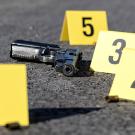
The primary purpose of this project was to develop and test a new large-scale approach to threat assessment that relies on objective data regarding firearm purchases. Specifically, to analyze firearm transaction records in California to better understand the firearm purchasing patterns of mass shooters and perpetrators of firearm-related crimes and to build risk prediction models to help identify individuals who might be at extreme risk for committing such crimes in the future.
To understand how the implementation and enforcement of universal background check (UBC) laws may influence the use of background checks during private party firearm transfers in the USA.
Many highest-risk dealers consistently sold crime guns across multiple years.
Our machine learning models accurately identified many high-risk firearms dealers and outperformed simpler prediction approaches.
IMPLICATIONS AND CONCLUSIONS
Using machine learning with detailed purchase and recovery records could efficiently identify high-risk retailers for targeted enforcement to disrupt the flow of crime guns.
Opportunities for policy and enforcement action based on our findings include targeting enforcement on the smal
Dr. Garen Wintemute, the director of the UC Davis Centers for Violence Prevention, and Julia Schleimer, Research Data Analyst with the UC Davis Centers for Violence Prevention, discussed gun violence and firearm purchasing trends during the first months of the COVID-19 pandemic in a Lunch & Learn webinar hosted by the Joyce Foundation.
The slideshow presented by Julia Schleimer can be found here.
Gun-related crime continues to be an urgent public health and safety problem in cities across the US. A key question is: how are firearms diverted from the legal retail market into the hands of gun offenders?
Firearm purchasing records offer a potentially important administrative data source to identify individuals at elevated risk of perpetrating firearm violence. In this study, we describe individual, firearm, and transaction characteristics of purchasers in California who were arrested for a firearm-related violent crime (FRV) as compared to the general population of registered purchasers in the state.
How do firearm owners and nonowners in the United States differ in support for and willingness to engage in political violence, and how do these measures vary among subsets of firearm owners?
(SACRAMENTO) Between 1996 and 2021, more than 5.2 million handguns and almost 2.9 million long guns were legally purchased in California. During 11 years of that time frame, 2010-2021, California law enforcement officers recovered 45,247 of these guns from crime scenes.
Why were some of those guns later involved in a crime, but most not? Were there characteristics or commonalities with crime guns? Researchers at the UC Davis Violence Prevention Research Program (VPRP) wanted to know.
Firearm violence is a major cause of death and injury in the United States. Tracking the movement of firearms from legal purchase to use in crimes can help inform prevention of firearm injuries and deaths. The last state-wide studies analyzing crime gun recoveries used data from over 20 years ago; thus, an update is needed.