The primary purpose of this project was to develop and test a new large-scale approach to threat assessment that relies on objective data regarding firearm purchases. Specifically, to analyze firearm transaction records in California to better understand the firearm purchasing patterns of mass shooters and perpetrators of firearm-related crimes and to build risk prediction models to help identify individuals who might be at extreme risk for committing such crimes in the future.
Database of state laws (2000-2024) regulating the carrying of firearms at parades, demonstrations, rallies, and similar events. Note that to determine whether firearm carrying is allowed or disallowed at such events, users must additionally review state concealed and open carry laws.
The database is publicly available via the Inter-university Consortium for Political and Social Research (ICPSR) on OpenICSPR. Access the database here.
Abstract BACKGROUNDMost Americans believe that gun-free zones make locations more vulnerable to violent crimes, particularly active shootings. However, there is no empirical evidence regarding the impact of gun-free zones on protecting locations from violence.
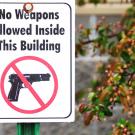
(SACRAMENTO) Gun-free zones have often been blamed for making schools, malls and other public areas more attractive to shooters; however, there have been no quantitative studies examining those claims. Now, in a first of its kind study published in The Lancet Regional Health Americas, researchers at UC Davis Health and other institutions have shown that gun-free zones may, in fact, reduce the risk of mass shootings.
What was supposed to be a time of happiness and optimism for a new beginning was ruptured by tragedy and terror. In late January 2023, two horrific mass shootings targeted Asian American and Pacific Islander (AAPI) communities in Monterey Park and Half Moon Bay, California.
“Four mass shootings in California in the past 10 days have left many wondering why this is still happening and what we can do to prevent it. In the Southern California city of Monterey Park, 11 people were killed in a ballroom by a man who was a frequent patron there. In Half Moon Bay, seven people were shot and killed at two agricultural sites by a co-worker.
The United States has experienced an unprecedented surge in homicides — the vast majority of which involve firearms. Mass shootings, however they are defined, are also increasing. Firearm suicide rates, in contrast, have remained stable. To understand these developments, it’s important to see where they came from. What are the long-term trends? What state and regional patterns exist in mortality and in firearm-violence prevention policies?
Mass shootings are a source of shared anguish and outrage among Americans and are becoming more frequent. Extreme risk protection orders (ERPOs), also known as gun violence restraining orders or “red flag” laws, are designed to help prevent these shootings. Our experts note that:
The Violence Prevention Research Program created a short report on research evidence for extreme risk protection orders (ERPOs) in preventing mass shootings.
Mass shootings are a source of shared anguish and outrage among the American public, and they are becoming more frequent. Extreme risk protection orders (ERPOs) are designed to prevent these shootings, and research supports their effectiveness.